1939-2017
“Wherever I was, I always felt a sense of comfort knowing I had a homeland. I believe that if I hadn’t studied in Hungarian, if I hadn’t thought in Hungarian, I wouldn’t have achieved as much. The entire way of thinking, the logic, the structure of the Hungarian language—it’s something truly remarkable, something we don’t fully appreciate.”
He played an undeniably decisive role in ensuring that, since the construction of Hungary’s first laser in 1964, Hungarian laser research has remained among the world leaders over the past sixty years. In addition to fundamental research, he always considered it important that the results of his scientific work improve and benefit people’s everyday lives. This mindset guided him in the early 2010s when he invented a way to tame laser light by eliminating its eye-hazardous properties — leading to the creation of Safe Laser Technology, which revolutionized low-level laser therapy.
He studied chemical engineering but spent more than fifty years conducting research in the field of physics. Besides his family, the Central Research Institute for Physics (KFKI) was his second home, where, alongside optical experiments, he focused primarily on laser research.
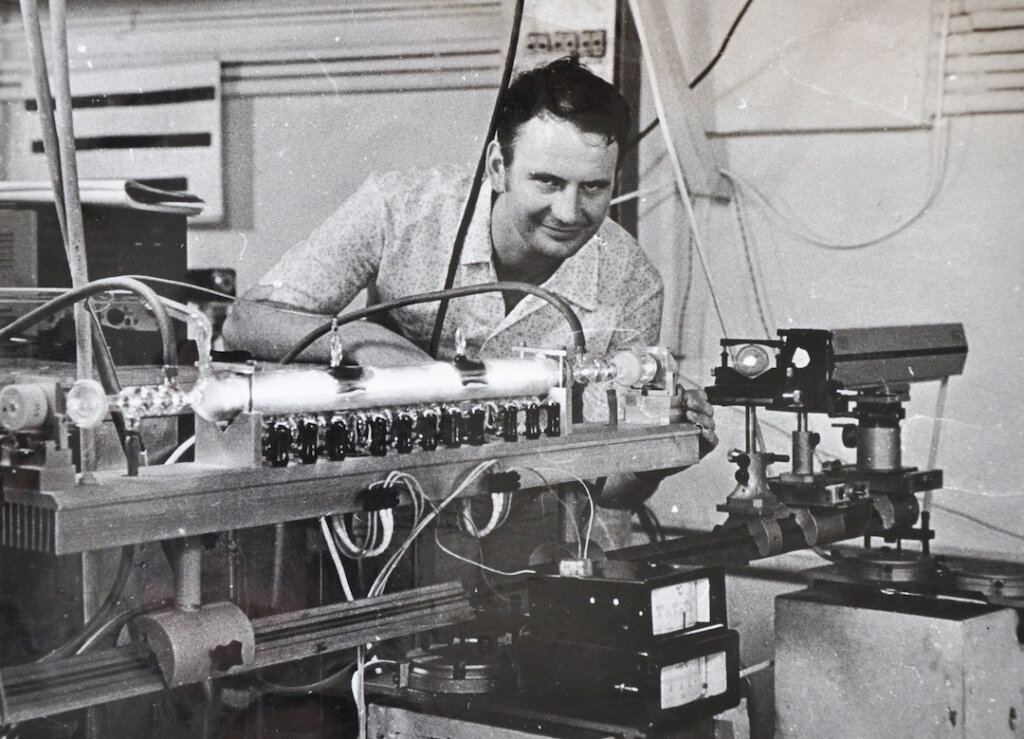

In the 1950s, despite the disadvantages he faced due to his background, his outstanding academic achievements earned him admission to the Petrik Lajos Secondary School of Chemical Industry. “I was fortunate to have excellent teachers, and I’m grateful that I had the opportunity to learn physics and chemistry from nationally renowned instructors like Tibor Papp,” he recalled in an interview.
After graduating from high school, he began working as a chemical technician at a paint factory. The turning point in his life came thanks to Tibor Mátrai, who encouraged him to apply to university after he joined the KFKI (Central Research Institute for Physics). He completed his degree in Chemical Engineering at the Budapest University of Technology and Economics through evening classes while continuing to work at KFKI—a place to which he always remained loyal.
As a researcher and visiting professor, he collaborated with some of the world’s most prominent physicists in the United States, Japan, Australia, Canada, Austria, and the Soviet Union. Although he felt at home wherever he went, he always loved returning to Hungary.
“I believe that if I hadn’t learned and thought in Hungarian, I would have achieved less. The entire mindset, the logic, the structure of the Hungarian language—it’s something truly wonderful, something we don’t even fully appreciate.” -he often explained this to his students, though he never boasted to them that he had learned English perfectly in just one year—practically from a dictionary.
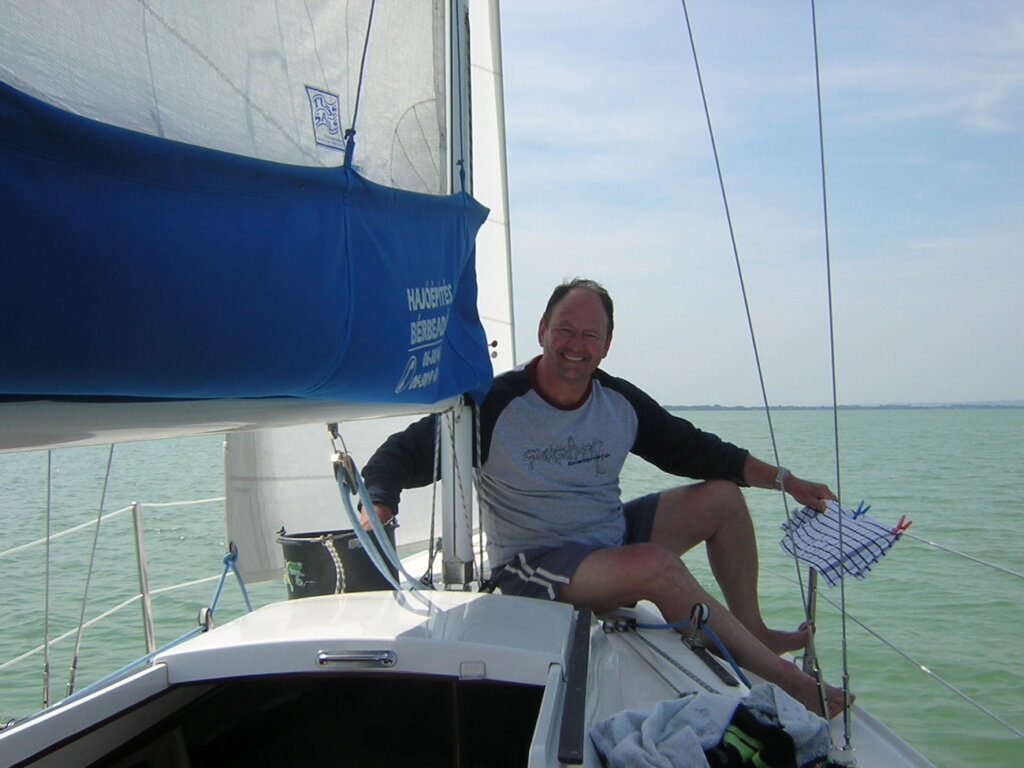
Alongside laser research and his family, sports played a major role in his life. In his youth, he played volleyball; later, sailing, skiing, and hiking became his main passions—he taught more than a hundred people how to sail. He didn’t consider himself particularly talented in sports, but he was legendary for his ability to concentrate, which he put to great use in table tennis: he was over 70 years old and still playing for the KFKI team.
He-Ne gas laser technology and spectral analysis.
Laser Spectroscopy
Gas Discharges Developed for Laser Applications
Research on Far-Ultraviolet Lasers Generated in Gas Discharges Developed for Laser Applications
He performed the first successful polarized-light therapeutic treatment under the supervision of Dr. Katalin Csizmadia.
A legjobb élmény biztosítása érdekében olyan technológiákat használunk, mint például a sütik (cookie-k), az eszközinformációk tárolására és/vagy elérésére. Ezen technológiák elfogadása lehetővé teszi számunkra, hogy olyan adatokat dolgozzunk fel ezen az oldalon, mint a böngészési szokások vagy az egyedi azonosítók. A hozzájárulás megtagadása vagy visszavonása hátrányosan befolyásolhat bizonyos funkciókat és szolgáltatásokat.
Ön sikeresen feliratkozott.
